Translation Certified Statement: What Is It and When Do You Need One?
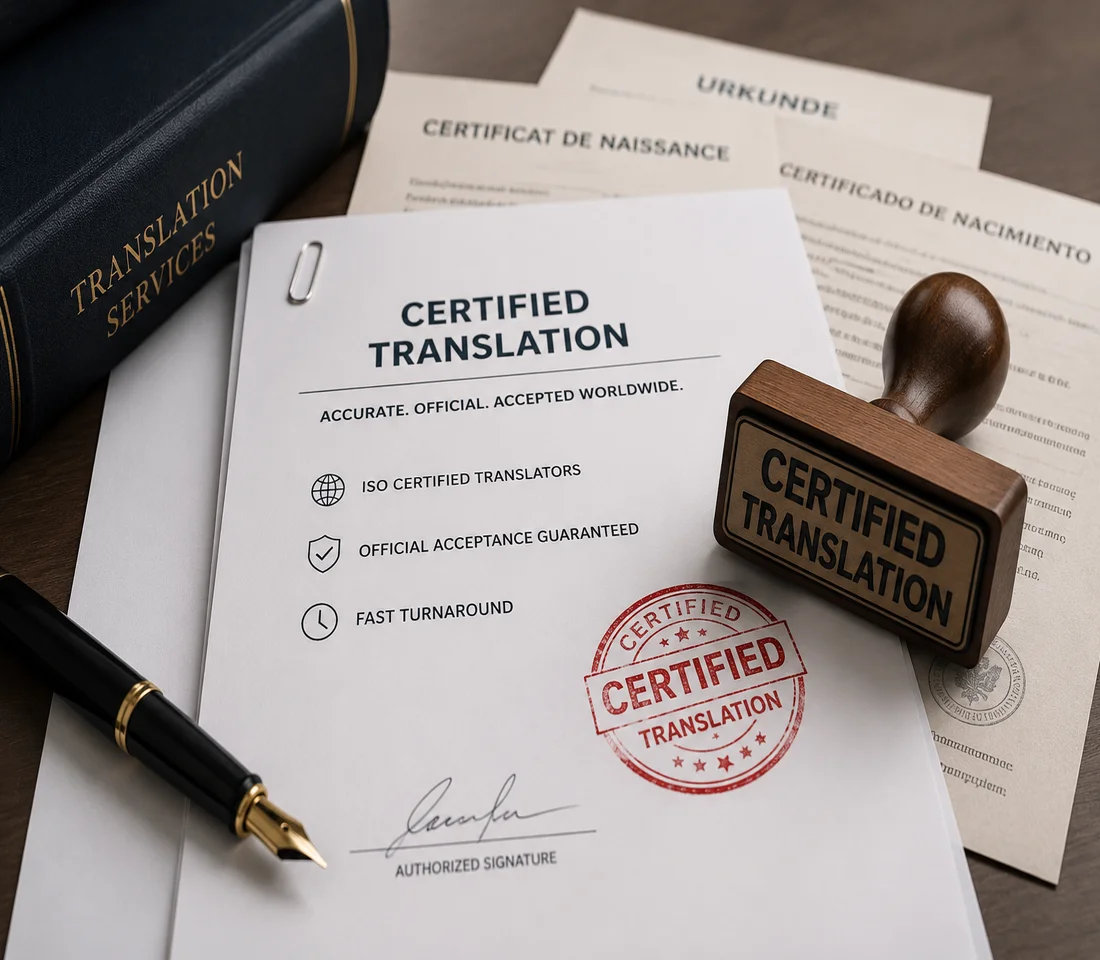
Summary: A translation certified statement confirms that a translated document is complete and accurate to the best of the translator's knowledge and that the translator is competent in the relevant languages. It is commonly associated with documents used for immigration, legal, educational, employment, and other official purposes. Certification is different from notarization, and requirements can vary depending on the organization receiving the translation. Before submitting a translated document, always check the specific requirements of the receiving agency or institution.
When a document is written in a language other than English, simply providing an English version may not be enough for an official application. Government agencies, courts, universities, employers, and other institutions may request a certified translation accompanied by a formal statement from the translator.
A translation certified statement helps establish the status of the translation and provides information about who prepared it. Understanding what this statement means and when it may be required can help prevent avoidable problems with important paperwork.
What Is a Translation Certified Statement?
A translation certified statement is a declaration accompanying a translated document. It generally confirms that the translator has accurately and completely translated the source document and is competent to translate between the relevant languages.
The statement may contain:
-
The translator's name
-
The languages involved
-
A declaration of accuracy and completeness
-
The date of certification
-
The translator's signature
-
Contact information
The exact format can vary. There is not necessarily one universal certification format accepted for every purpose.
The important distinction is that the certification concerns the translation, not necessarily the authenticity of the original document. A translator generally confirms that they accurately translated what appears in the source document. They are not automatically certifying that the original document itself is genuine.
When Is a Certified Translation Needed?
Certified translations are often used when documents are being submitted to organizations that require formal language documentation.
Immigration
Immigration applications can involve birth certificates, marriage certificates, divorce records, academic documents, court records, and other supporting paperwork.
When an official document is written in a foreign language, the relevant immigration authority may require an English translation that meets its applicable requirements.
Legal Matters
Courts, attorneys, and other legal professionals may need translated contracts, declarations, certificates, correspondence, or evidence.
Because legal documents can have significant consequences, the translation needs to accurately preserve the meaning of the source document.
Education
Students may need translations of diplomas, transcripts, certificates, and other academic records when applying to educational institutions or credential evaluation services.
Employment
Employers and professional organizations may request translated licenses, qualifications, certificates, or employment records when evaluating an individual's credentials.
What Information Should the Certification Include?
The exact wording depends on the purpose of the translation and the requirements of the recipient.
A useful certification should clearly identify the translator and establish that the translator is making a statement about the completeness and accuracy of the translated material.
For example, a certification may state that the translator is competent to translate from the source language into English and that the resulting translation is complete and accurate to the best of the translator's knowledge.
The statement should be truthful and should not make claims beyond the translator's role.
Is Certification the Same as Notarization?
No. Certification and notarization serve different purposes.
A certification generally involves a translator declaring that a translation is complete and accurate. Notarization involves a notary public verifying an aspect of the signing or declaration process.
Some organizations may require only certification. Others may request additional notarization or specific document formalities.
Therefore, someone should not automatically assume that a notarized translation is required simply because a translation is being used for an official purpose.
The receiving organization should be consulted for its current requirements.
Why Does the Translator's Qualification Matter?
A certified statement is only useful when the underlying translation accurately represents the source document.
Official documents frequently contain names, dates, addresses, seals, stamps, abbreviations, legal terminology, institutional terminology, and other details that require careful handling.
A translator must understand both languages and recognize how the terminology works in context.
Word-for-word translation can sometimes create problems. A phrase that sounds natural in one language may require a different construction in another language to preserve its actual meaning.
Accuracy should take priority over simply replacing words.
What About Stamps, Seals, and Handwritten Information?
Official documents may contain information outside the main printed text.
Examples include:
-
Official stamps
-
Seals
-
Signatures
-
Handwritten notes
-
Marginal entries
-
Certification marks
-
Document numbers
Depending on the purpose and requirements, these elements may need to be represented appropriately in the translation.
A translator should not simply ignore information because it is visually separate from the main text.
Can a Family Member Translate the Document?
Knowing two languages does not automatically mean someone is qualified to prepare a formal translation.
A family member or friend may understand the general content of a document but may not have experience with legal, immigration, academic, or administrative terminology.
When a receiving organization specifically requires a certified translation, the person preparing the translation should be able to meet the organization's requirements.
Using a professional translation provider may also provide a clearer record of who prepared and certified the translation.
What Should You Do Before Ordering a Certified Translation?
First, identify the organization receiving the document.
Next, review its current instructions concerning:
-
Whether a translation is required
-
Whether certification is required
-
Whether notarization is required
-
Whether the entire document must be translated
-
Whether specific formatting or submission requirements apply
Provide a clear copy of the original document. If the source is difficult to read, the translator may be unable to determine names, dates, or other details accurately.
It is also important to explain the intended use of the translation. A document being submitted for immigration may have different requirements from one being submitted to a university or court.
Conclusion
A translation certified statement provides a formal declaration about the completeness and accuracy of a translated document. It can be an important part of paperwork prepared for immigration, legal, educational, employment, and other official purposes. Since requirements vary, checking the recipient's instructions before ordering or submitting a translation is essential.
For individuals and organizations that need professional translations for official purposes, The Spanish Group provides translation services focused on accurate, professionally prepared documents and appropriate certification.
FAQs
1. What is included in a certified translation statement?
It commonly includes a declaration that the translation is complete and accurate, along with the translator's identifying information, signature, date, and language qualifications or competency statement.
2. Does every translated document need certification?
No. Whether certification is required depends on the organization receiving the document and the purpose for which the translation is being used.
3. Is a certified translation the same as a notarized translation?
No. Certification and notarization are different processes. An organization may require certification, notarization, both, or neither.
4. Can a certified translation change an error in the original document?
A translator generally should not silently correct information in the source document. The translation should accurately represent the original, including apparent errors, unless the receiving authority provides different instructions.
5. How do I know what certification format I need?
Check the current requirements of the organization receiving your document. This is particularly important for immigration, legal, educational, and other official submissions.