Why Businesses Use Radio Frequency Identification
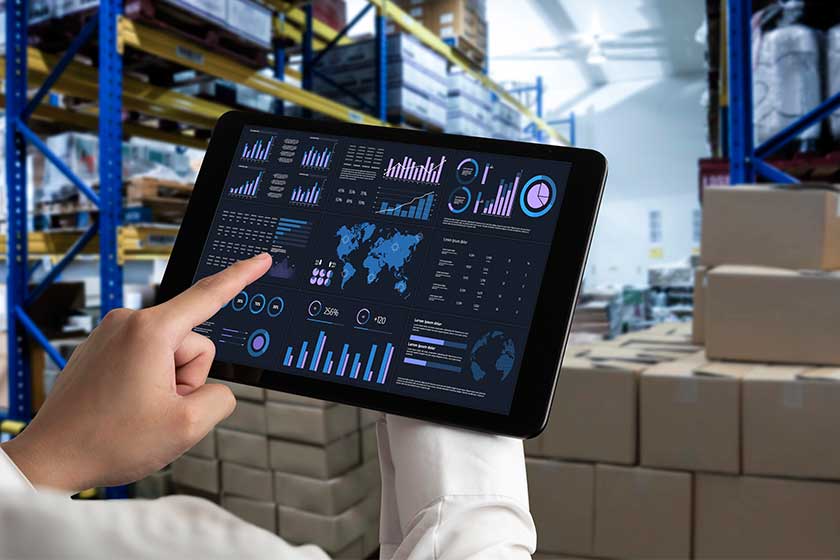 Summary: Radio Frequency Identification helps businesses improve visibility across assets, inventory, equipment, and operations. By automating identification and data capture, RFID reduces manual work, improves accuracy, supports faster workflows, and provides better control over business resources. Its flexibility makes RFID valuable across manufacturing, healthcare, logistics, warehousing, retail, and other industries.
All businesses need specific and reliable methods of knowing what they have, where it sits, and how it moves in an everyday manner. As operations scale, manually tracking assets & inventory is becoming increasingly difficult. Spreadsheets, paper records, and barcode scans can tell us something useful, but that information is only as good as the employee manages to record every movement correctly.
This presents a challenge, and Radio Frequency Identification (RFID) provides businesses with yet another solution to this challenge.
RFID uses the strategy of radio waves and is used to identify tagged objects, hence giving organizations the ability to record information related to assets, inventory, equipment, etc., with less human intervention. RFID can provide teams with improved visibility while also enhancing operating efficiency when used with the right software and workflows.
But why RFID in business? The answer is deeper than just knowing where that item is located.
Improve Visibility Across Operations
Organizations can have thousands of assets or inventory items travelling between storage areas, production lines, departments, facilities, and customers. Tracking every action manually leaves opportunities for information to fall through the cracks.
RFID automatically gathers the identity of items with tags as they come in range of RFID readers. It makes tracking information a more stable source for businesses.
Enhanced visibility helps teams respond to the following crucial operational queries:
-
Where is an asset?
-
When was it last detected?
-
Has inventory moved?
-
Which equipment is available?
-
Was an item moved to somewhere else?
-
Are assets used as expected?
Employees can spend less time searching for information and more time managing operations with data managed accurately.
Increase Inventory Accuracy
Inventory accuracy is important in almost any industry you can name.
It intends to provide manufacturers with information regarding what materials are available. Warehouses need accurate stock information. Retailers need visibility into products. Healthcare organizations must find equipment and supplies.
Discrepancies between inventory records and physical inventory can harm businesses with delays, unnecessary purchases, stockouts, or excessive inventories.
One example is RFID, which helps enhance inventory accuracy by enabling automatic identification of tagged articles.
By integrating RFID with inventory management software, companies can have a real-time view into the movement and availability of their inventory.
Track Assets More Effectively
Companies spend thousands of dollars on equipment, tools, mobile devices, containers, and other pertinent assets. If you lose track of these resources, it can create replacement costs and wasted time.
RFID establishes a digital identity & association with the physical asset.
RFID readers can read the tags on the equipment, indicating that it passed through a certain point in an operation. This enables organizations to track the movement of assets and see where the equipment was last detected.
This level of visibility can prove vital for businesses managing large volumes of shared or mobile assets.
Support Loss Prevention
Loss from your assets and inventory directly affects operational costs.
Items can be lost, transferred without documentation, placed in the wrong place, or taken out of a facility illegally.
RFID offers a clearer view of asset tracking and may provide automated signals or workflows when certain events occur.
One way to do this is for organizations to implement processes around assets leaving specific areas. If RFID catches an anomaly in movement, teams can study the event more quickly.
This paves the way for a more proactive loss prevention approach.
Track the Data You Can Turn into Actions
RFID makes data, but as far as business value is concerned, it is actually what companies do with that data that counts.
By connecting RFID data with existing workflows, whether for asset management, inventory management, ERP, WMS, or other enterprise systems, enterprises can bring tracking information directly into their processes.
This can enhance reporting, automatic notifications, maintenance tasks, restocking inventory, and other operational functions.
The use of a centralized platform can also provide trends for your team, rather than using isolated tracking records.
For example, businesses can analyze:
-
Asset utilization
-
Inventory movement
-
Equipment availability
-
Asset downtime
-
Location history
-
Maintenance requirements
-
Inventory trends
As a result, RFID becomes the enabling technology of an extended operational strategy instead of just an additional piece of hardware.
Support Better Decision-Making
Reliable information strengthens business decisions.
With inaccurate tracking data, managers would be forced to guess or to take periodic stock counts. RFID can help in fulfilling this very need with more frequent and automatic record retrieval, allowing decision-makers to have a clearer view of what is going on within operations.
This information can help organizations figure out where they need resources, which assets are being underutilized, where delays are in a process, and what is possible to improve.
Gradually, this can provide for better planning and the efficient utilization of resources.
Why RFID Works Across Industries
RFID can be used in many different types of business environments.
For manufacturers, it can enable work-in-process tracking, tool management, direct part marking, and production visibility.
RFID has specific applications in warehousing and distribution by increasing the accuracy of inventory, receiving, picking, and shipment tracking;
For example, in healthcare, organizations can leverage RFID for greater visibility into medical equipment, supplies, and other mobile assets.
Supply Chain function, Inventory visibility, shelf management, and loss prevention.
RFID can help with shipment visibility and asset management in transportation and logistics.
Because of this, the technology can be adapted to various workflows — and the end goal is always the same: pairing things-on-physical with useful information in digital.
Build a More Connected Operation
It is known that Radio Frequency Identification is used by companies mainly due to the increasing demand for operational visibility.
RFID provides a way to minimize the amount of manual tracking, improve inventory accuracy, provide better asset visibility, open up faster workflows, and give information for teams to make informed choices.
But success with RFID cannot be reduced to simply choosing tags and readers. Businesses demand the correct hardware, software, integration approach, as well as workflows and constant assistance.
And this is why an experienced technology partner can help.
How to Implement RFID & Decipher the Data
RFID can help businesses see more clearly the assets and inventory flowing through their operations. However, converting RFID data into measurable operational value necessitates a solution built around the real-world functioning of your enterprise.
Lowry Solutions, Inc. offers end-to-end asset and inventory tracking solutions uniting RFID, barcode, GPS, Bluetooth, UWB software, hardware integration, and a full village of support going into 2023. Having been in the industry for several decades and taking a technology-agnostic position, Lowry can assist organizations in determining the appropriate tracking solution required by their business.
Ready to improve visibility and take greater control of your assets and inventory? Connect with Lowry Solutions to explore an RFID tracking solution built around your business.
Frequently Asked Questions
1. What is Radio Frequency Identification used for?
RFID is used to identify and track assets, inventory, equipment, tools, products, and other physical items throughout business operations.
2. Why do businesses choose RFID over manual tracking?
RFID can automate identification and reduce repetitive data entry, helping businesses improve tracking accuracy and operational efficiency.
3. Can RFID track inventory?
Yes. RFID can help businesses track inventory as it moves through receiving, storage, production, picking, and shipping processes.
4. Which industries use RFID?
Manufacturing, healthcare, retail, warehousing, distribution, transportation, logistics, automotive, and government organizations can all use RFID for different tracking applications.
5. Can RFID integrate with existing business systems?
Yes. RFID data can be integrated with platforms such as ERP, WMS, asset management, and other enterprise systems to support connected workflows and reporting.