How to Choose Authentic Native American Necklaces
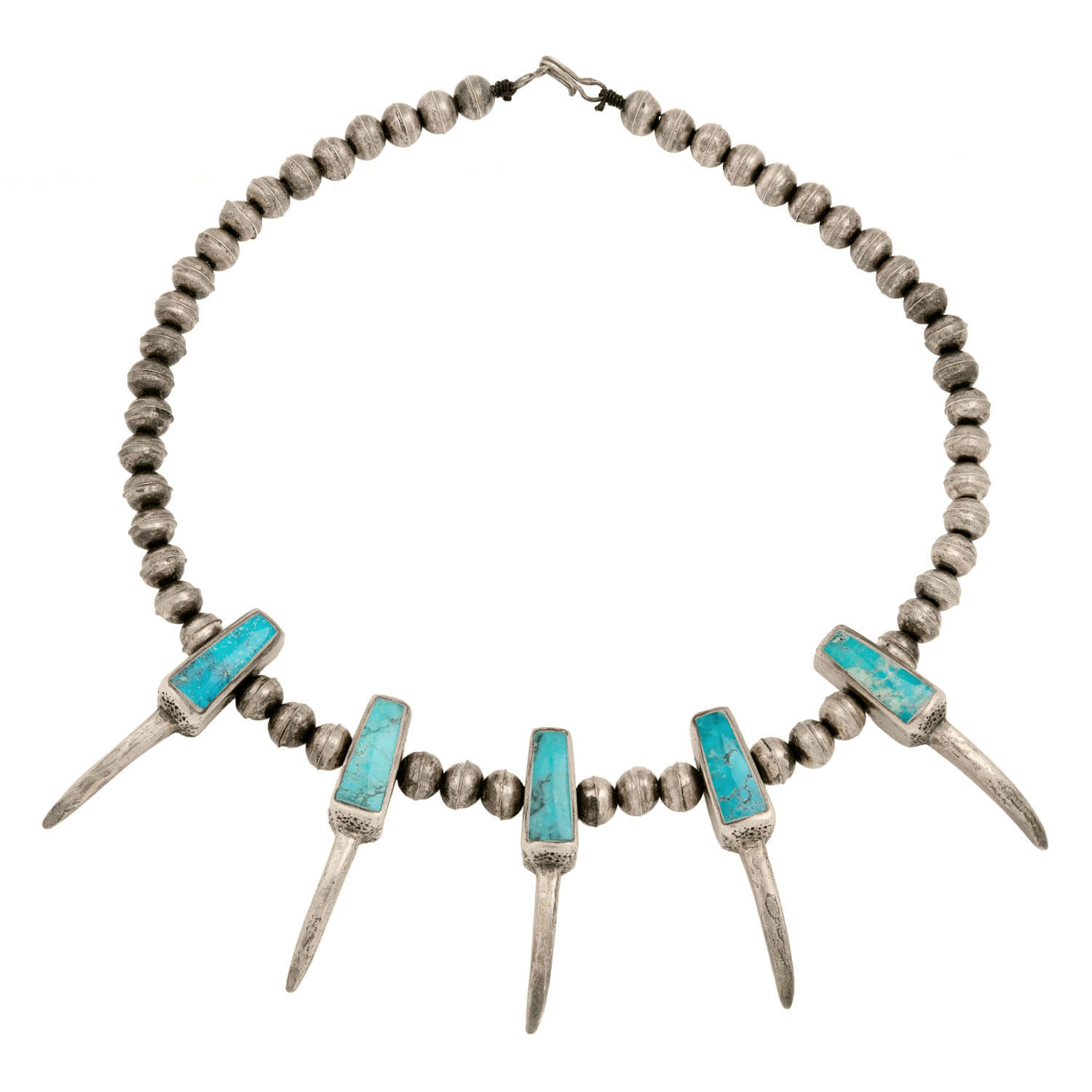
Authentic Native American necklaces start with a maker you can name and a seller who will put that name in writing. Counterfeits still circulate in online marketplaces and casual sales. Ask a few direct questions before you pay.
Verify the Seller's Legal Claim and Tribal Attribution
Federal law, through the Indian Arts and Crafts Act, requires that a piece sold as Native American-made be made by an enrolled member of a federally recognized tribe. Don't assume every seller follows it, so ask. Request the artist's name and tribal affiliation. Get a written guarantee listing the artist or tribe, the materials and the date acquired.
Read Hallmarks and Maker's Marks
Marks can also be initials, tribal symbols or shop stamps, and pictorial ones such as corn or horses can point toward Navajo, Hopi or Zuni work, depending on style and technique.
Check the stamp under a jeweler's loupe. Hand stamping looks crisp but slightly irregular.
An unsigned piece isn't automatically suspect. Many older necklaces were never marked consistently, so ask why it's unsigned and look for hand-finishing instead.
Assess Turquoise Grade and Material
Honest sellers label the grade of the stone on Native American turquoise necklaces. Reconstituted turquoise and dyed howlite are what you want to avoid when they're sold as natural.
Ask plainly whether the stone is natural, stabilized or enhanced. If a "natural" stone is a uniform bright blue with a plastic-like finish, get the answer in writing or walk away.
Check Construction, Patina and Age
Handwork is uneven in small, visible ways. Zuni clusterwork and needlepoint use tiny hand-set stones, Santo Domingo (Kewa) heishi uses hand-drilled discs of shell or stone, and Hopi overlay shows hand-hammered texture.
Patina builds slowly, while artificial aging tends to look uniform, so check it under bright light. A squash blossom that feels light, has casting bubbles or shows no wear despite a claimed age is probably new.
Compare Price and Provenance
Vintage Native American jewelry is priced by age, artist, turquoise grade and silver weight. A "vintage, artist-made" necklace priced far below comparable pieces deserves doubt.
Ask where the seller acquired the piece and how long they've held it. Settle the return policy first. You want time for a third-party appraisal and a full refund if authenticity fails.
Start Your Authentic Search
Questions about a piece go to our contact page or [email protected].
Frequently Asked Questions
What does the Indian Arts and Crafts Act mean for me as a buyer?
It's a federal law governing how Native American-made jewelry can be sold. Ask sellers for written attribution or proof of enrollment.
Are unsigned Native American necklaces fake?
No. Many older and traditional pieces were never marked. Look for irregular bezels, real patina and varied stone placement, and ask the seller why it's unsigned.
What is the difference between stabilized turquoise and natural turquoise?
Natural turquoise is untreated. Stabilized turquoise is hardened with resin, which makes it more durable and usually costs less, and it's acceptable when disclosed.
How can I spot a mass-produced fake Native American necklace?
Look for uniform beads, repeated identical hallmarks, machine-smooth solder joints and casting bubbles under a loupe. Vague answers about materials and no paperwork are further warning signs.