Stainless Steel Under Cabinet Range Hoods: A Practical Buying Guide
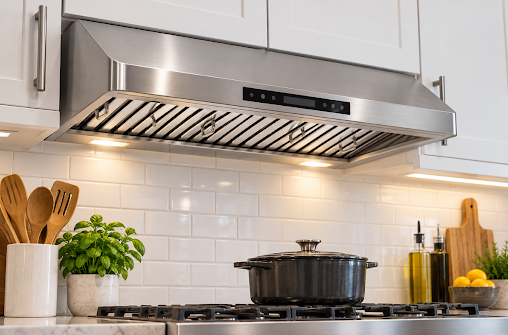
Kitchen ventilation plays an important role in controlling cooking odors, airborne grease, smoke, steam, and heat. For kitchens where overhead space is limited or where a streamlined installation is preferred, an under-cabinet range hood can provide ventilation without requiring a large wall-mounted canopy. Among the available finishes, stainless steel remains a common choice because of its durability, clean appearance, and compatibility with many kitchen designs. Understanding how stainless steel under-cabinet range hoods work, what specifications matter, and how installation affects performance can help homeowners choose a suitable ventilation system.
What Are Under-Cabinet Range Hoods?
Under-cabinet range hoods are ventilation appliances installed beneath kitchen cabinets and above a cooktop or range. Their compact design allows them to fit into kitchens where cabinetry already occupies the wall space above the cooking surface. The National Kitchen & Bath Association recommends properly sized ventilation for cooking appliances because cooking produces moisture, odors, grease, and other airborne pollutants. For homeowners comparing stainless steel under-cabinet range hoods, both the hood's physical dimensions and its ventilation capacity should be considered before purchase. A range hood typically captures airborne contaminants produced during cooking, and either exhausts them outside through ductwork or filters and recirculates the air, depending on the configuration.
How Powerful Should an Under-Cabinet Hood Be?
Ventilation capacity is commonly measured in cubic feet per minute, or CFM. CFM indicates the volume of air a hood can move under specified conditions. When selecting stainless steel under-cabinet range hoods, buyers should therefore consider the entire ventilation system rather than focusing only on the advertised CFM. The required airflow depends on factors such as the cooking appliance, cooking style, hood configuration, and ductwork. The Home Ventilating Institute provides ventilation guidelines based on cooking equipment and installation conditions rather than recommending a single airflow figure for every kitchenA higher CFM rating does not automatically guarantee better ventilation. Duct size, duct length, bends, termination, and installation quality can all affect actual performance.
How Important Is Ductwork?
Ductwork has a direct influence on ventilation performance. A powerful hood connected to poorly designed ductwork may not perform as expected. The duct should be appropriately sized for the hood and installed according to the manufacturer's requirements. Excessive bends, long duct runs, undersized ducts, and restrictive terminations can increase resistance to airflow. When installing stainless steel under-cabinet range hoods, the duct route should therefore be considered before purchasing the appliance. The U.S. Department of Energy notes that properly designed ventilation systems are important for controlling indoor air pollutants and maintaining effective airflow.
How Should Stainless Steel Range Hoods Be Maintained?
Regular cleaning helps maintain both performance and appearance. Grease can accumulate on filters and internal surfaces over time, particularly in kitchens where frying, grilling, or high-heat cooking is frequent. Filters should be cleaned according to the manufacturer's instructions. Exterior stainless steel surfaces should generally be wiped using appropriate non-abrasive cleaning methods and dried afterward to minimize streaking and water marks. Maintenance should also include checking the duct termination and surrounding area for obstructions where accessible. Any unusual vibration, reduced airflow, or persistent noise should be investigated rather than ignored.
Conclusion
A well-planned ventilation system can make everyday cooking more comfortable while helping manage airborne grease, odors, smoke, and moisture. The best range hood is ultimately one that matches the cooking appliance, kitchen layout, and ventilation requirements. We recognize that choosing a ventilation system involves more than comparing appearance and airflow ratings. At Proline Range Hoods, we focus on helping homeowners understand these practical considerations so they can select a hood that fits their kitchen and cooking needs. Our goal is to make it easier to understand how different hood designs fit specific cooking environments.