Understanding Ventilation Needs for a 30-inch Island Range Hood
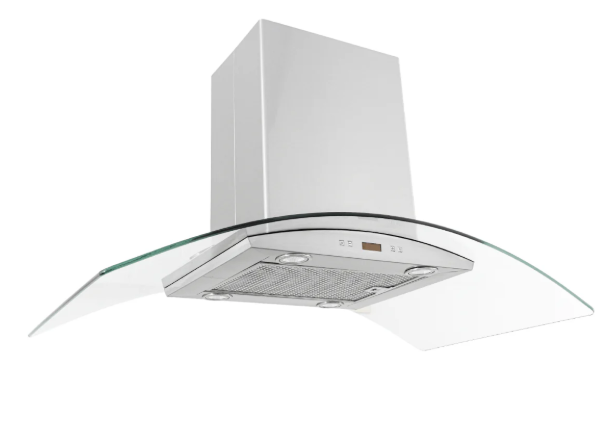
A 30-inch island range hood is a common choice for homeowners whose cooking islands feature a 30-inch cooktop, since matching hood width to range size helps maximize smoke and steam capture. Island kitchens present unique ventilation challenges because the hood hangs freely with airflow approaching from multiple directions, unlike wall-mounted units that only face one side. Because the 30-inch island range hood is visible from every angle in most island layouts, both performance and visual design play a role in selecting the right unit. Homeowners planning an island kitchen often prioritize a hood that fits the scale of a 30-inch cooktop without overwhelming the surrounding space. Getting the width right ensures the hood does its job efficiently while still looking proportionate to the island and surrounding cabinetry.
Why Island Hoods Require More Power
Island hoods generally need stronger airflow than wall-mounted models because they capture smoke and steam from an open space rather than a corner or wall recess. A properly sized 30-inch island range hood should offer sufficient CFM (cubic feet per minute) to pull rising heat and grease particles upward before they disperse into the kitchen or adjoining living areas. This is especially important for high-heat cooking methods like searing, frying, or wok cooking, which produce more airborne grease and smoke than simmering or baking. Multiple fan speed settings allow a hood to adjust to different cooking intensities, running quietly during light cooking and ramping up during heavier tasks. Noise level is a particularly important factor for island hoods since they typically sit in open, social areas of the home, often adjacent to dining or living spaces.
Ducted and Recirculating Configurations
A 30-inch island range hood can generally be installed in one of two ways: ducted to the exterior or configured for recirculating use with charcoal filters. Ducted systems vent smoke, grease, and odor outside the home, which typically provides the most thorough air quality improvement. This setup works well when a home's structure allows for ductwork running from the island to an exterior wall or roof. Recirculating configurations filter air through activated charcoal before releasing it back into the kitchen, which is useful in homes where running ductwork from an island location is structurally difficult. Some hoods are designed to function in either mode, offering flexibility if a kitchen's ventilation setup changes during a renovation or if ducting becomes feasible later.
Design Factors That Affect Performance
Because island hoods are viewed from all sides, their shape, finish, and mounting hardware are more prominent design elements than on wall-mounted units. Clean lines and finishes that coordinate with surrounding cabinetry and countertops help the hood feel like part of the kitchen's overall design rather than an isolated appliance. Mounting height significantly affects how well a hood performs. Installing it too high above the cooktop reduces its ability to capture smoke and steam effectively, while mounting it too low can interfere with sightlines or movement around the island. Careful measurement of ceiling height and cooktop placement before installation helps ensure the hood performs as intended.
Filter Types and Maintenance Requirements
Most 30-inch island range hood models use two filtration stages: metal grease filters that capture larger particles and, in recirculating setups, charcoal filters that absorb odors. Metal filters are often removable and dishwasher-safe, allowing for straightforward regular cleaning, ideally every few weeks depending on cooking frequency. Neglecting filter maintenance can reduce airflow efficiency over time, as trapped grease restricts the movement of air through the unit. Charcoal filters used in recirculating setups need periodic replacement since their odor-absorbing capacity diminishes with use. Households that cook frequently or prepare strongly aromatic dishes may need to replace these filters more often than those with lighter cooking habits.
Structural Considerations for Installation
Island hoods require sturdy mounting to the ceiling structure rather than a wall or cabinet, which makes installation planning more involved than for wall-mounted units. Builders and installers typically need to confirm that ceiling joists or additional bracing can support the hood's weight securely. Well-planned kitchen island ventilation ultimately depends on getting these structural and sizing details right well before installation begins. Matching a 30-inch island range hood from Proline Range Hoods to your cooktop—typically equal to or slightly wider than the range—is one of the most effective ways to improve capture efficiency while cooking. Achieving optimal island ventilation depends on getting these sizing and structural details right well before installation. During a kitchen renovation, homeowners often select a Proline Range Hood early in the planning phase to ensure proper alignment with ceiling structure, ductwork routing, and cabinetry layout.