Ventilating an Open Kitchen: What Island Cooktops Really Need
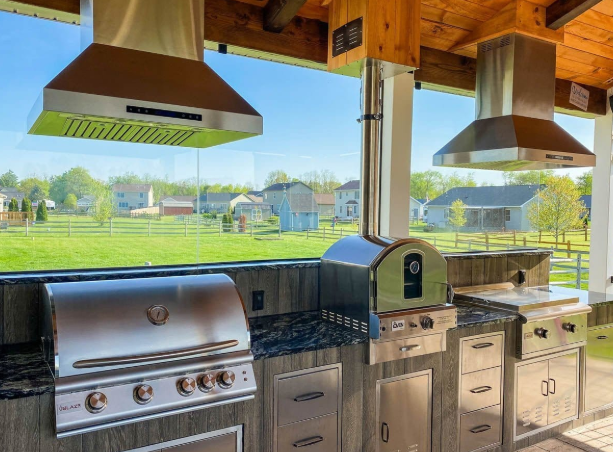
An island cooktop looks great in an open floor plan, but it creates a ventilation problem that most standard hood styles were never designed to handle. A kitchen island hood in the middle of a renovation project often becomes one of the more complicated decisions homeowners face, since it needs to pull smoke, steam, and grease from an exposed, multi-sided cooking surface rather than a wall-backed one. Knowing what separates island hoods from wall-mounted or under-cabinet models helps homeowners choose equipment that actually performs in an open layout.
Why Open Cooktops Behave Differently
Since island cooktops have no surrounding walls or cabinetry to help contain rising smoke, airflow patterns around them are far more unpredictable than in enclosed kitchen layouts. Foot traffic, HVAC airflow, and nearby open windows can all push smoke sideways before it ever reaches the hood above. A well-engineered kitchen island hood compensates for this by offering broader capture coverage and stronger suction than a comparable model mounted against a wall.
Sizing for Full Coverage
Because there's no wall to funnel smoke upward, island hoods typically need to extend past the cooktop's edges more generously than standard sizing charts suggest for wall-mounted units. This extra overhang matters most at the corners of the cooktop, where smoke tends to escape capture first. Homeowners installing a kitchen island hood over a range with several burners or a griddle should err on the side of a larger unit to maintain consistent performance across the entire surface.
CFM Requirements in Open Floor Plans
Airflow capacity, measured in CFM, carries more weight in island installations simply because there's more open space for smoke to disperse into before being captured. Homes with vaulted ceilings or kitchens that flow directly into dining and living areas generally need higher CFM ratings to keep ventilation effective across the whole connected space. An underpowered unit in this setting often results in lingering odors reaching well beyond the kitchen itself.
Treating the Hood as a Design Element
Because island hoods are visible from nearly every angle in the room, they function as much as a design statement as a ventilation tool. Finishes such as polished stainless steel, copper, and sculpted custom shells let a kitchen island hood anchor the visual center of the kitchen. Many homeowners select the hood's finish to complement countertops, cabinetry, or lighting fixtures already planned for the space.
Planning the Ducting in Advance
Most island hoods rely on ceiling-routed ductwork, which typically demands more upfront planning than a straightforward wall installation. Factors like roof access, distance to an exterior vent, and structural framing all influence how complicated the installation becomes. Homeowners working through new construction or a full kitchen remodel generally find it far simpler to plan ducting early rather than retrofitting it into a completed ceiling.
Noise Levels Around Open Living Spaces
Because island hoods often sit near open dining or seating areas, sound output plays a bigger role in daily usability than it might elsewhere in the kitchen. A quieter kitchen island hood makes people more likely to run it at full, effective power instead of avoiding higher speeds to keep noise down during conversation or entertaining. Multi-speed settings and dimmable lighting add further convenience for everyday cooking.
Keeping Airflow Strong Long-Term
Routine filter cleaning, whether mesh or baffle style, prevents grease from gradually reducing suction strength. Since island hoods remain constantly visible, wiping down exterior surfaces also matters more here than with hidden ventilation styles. Checking ductwork periodically for buildup or blockages helps catch performance loss before it becomes noticeable.
Conclusion
At Proline Range Hoods, we build our island models to deliver strong, evenly distributed airflow paired with finishes designed to stand out in open kitchen layouts, and our lineup is engineered specifically to meet the added ventilation demands island cooktops create. Choosing the right hood ultimately comes down to matching size, CFM, and design to your specific kitchen layout and cooking habits. With properly sized island ventilation in place, open-concept kitchens stay noticeably clearer of smoke and cooking odors, even during heavier use.